Photography Education

Whether you just picked up your first camera or you've been shooting for years and hit a plateau, there's always more to learn. This section is where Fstoppers publishes educational content aimed at genuinely improving your photography — not just gear tips, but the foundational understanding of light, composition, and visual thinking that makes the difference between a competent photographer and a compelling one.
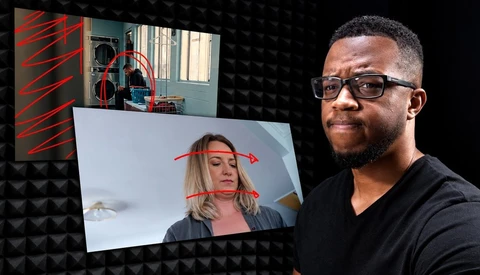
Delete Someone From a Group Photo Without Ever Opening Photoshop

Remove a person from the middle of a group photo, close the gap as if they were never there, and do it all without touching Photoshop. That option is now sitting inside Lightroom for anyone who has never gotten comfortable with layers and masks.
Lens Flare and The Incredible Physics of Modern Lenses

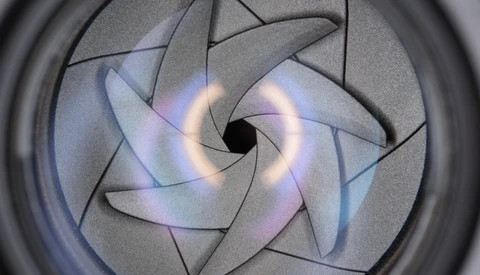
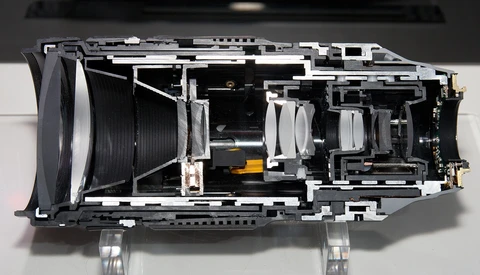
A bare, uncoated air-to-glass surface sends roughly 4 percent of the light striking it back the way it came, and a current professional 24-70mm f/2.8 zoom stacks about 30 of those surfaces in a row. Uncoated, less than a third of the light entering the front would reach the sensor as part of the image. Most of the rest heads back out the front of the lens, and flare is what happens when the fraction that turns around again lands on your picture.

Six Underrated Canon RF Lenses You've Probably Overlooked

The best Canon RF lens for your kit might be one almost nobody talks about. Six of them sit in the shadows of pricier alternatives, dismissed over a single spec or forgotten entirely, even though they deliver image quality that holds up against Canon's L-series glass.

Photoshop Just Replaced Brightness and Contrast With Something Better

Photoshop's Brightness/Contrast slider is gone, replaced by a new Light adjustment layer that pulls Camera Raw controls straight into the main editor. Exposure, contrast, highlights, shadows, whites, and blacks now live in a single panel that behaves like a nondestructive version of the Camera Raw sliders many of you already trust.

How Long Exposures Erase People: The Math of Making Crowds Vanish

Put a 35mm lens on a full frame camera, stand about 20 m back from a plaza, and each pixel in the file covers roughly 3.4 mm of the ground at that distance. A person walking across that view at an ordinary pace clears their own shoulder width in about a third of a second, so across a four-minute exposure they sit over any single pixel for about 0.13 percent of the time. That fraction is the whole mechanism, and once you can compute it, and then combine the occupancy of everyone walking the same line, you can predict which people will vanish and which ones will ruin the frame.

Why the Pentax 17 Won Him Back After a Year

The Pentax 17 landed in 2024 to a wall of loud opinions, and a year of actual use has a way of softening the sharpest first impressions. A camera you dismiss on a one-week deadline can look very different once you've dragged it through Colorado, the Jersey Shore, and a 4:30 a.m. boardwalk sunrise.

Why the Best Light Shows Up When You Have No Time

Rain in the forecast for the first time in months, dark clouds gathering to the north, and a family lunch that can't be moved. That collision between perfect conditions and almost no time is the reality most people shooting landscapes live with, and it shapes every decision made across one very short morning.

Why the Best Photo Shoots Are the Ones You Never Planned

The best photo shoot of your year will probably be the one you never planned. Every photographer eventually runs into the gap between careful preparation and the messy reality of shooting, and how you handle that gap shapes the work you end up proud of.

Six Cameras Went to Peru and Only One Impressed

Take a single trip with six different cameras and a hard question follows you home: which one actually earned its place in the bag? Peru offered a real test of that, pitting a video-friendly workhorse against a stills machine that stopped everyone cold.

Why Bad Weather Is the Best Thing That Can Happen to a Landscape Shoot

Fresh snow skimming the peaks, streams cutting through beaches, and moss-covered cascades that only exist because the storms haven't ripped them clean. Fiordland packs more usable foreground into a single beach than most locations offer in a week, and knowing how to read it is the difference between a snapshot and a photograph you'll return to for years.

A $700 Smart Telescope vs. a $4,000 Milky Way Rig: Which Wins?

A $700 smart telescope and a $4,000 traditional rig pointed at the same patch of sky on the same night in northern New Mexico, and the gap between them was smaller than the price tags suggest. If you've been weighing whether a point-and-shoot device can stand in for a full Milky Way setup, this is the comparison that answers it.

The Foreground Mistake That Kills Depth in Your Images

A landscape image either pulls the viewer into the scene or leaves them looking at a flat surface, and the difference usually comes down to how you handle depth. Master a few composition habits and your photos start to feel like a place someone could walk into rather than a picture on a screen.

The 1-Inch Sensor Is Not One Inch, and the Name Is a 70-Year-Old Fossil

Check the active imaging area specified for the sensor inside a Sony RX100 and you get 13.2 x 8.8 mm, with a diagonal of about 15.86 mm. That is close to 16 mm, not the 25.4 mm that an inch is supposed to be. The "1 inch" printed on the spec sheet does not describe any dimension of the imaging area, and the reason runs all the way back to a glass vacuum tube that stopped being manufactured decades ago.

Put Your Phone in Your Bag and Watch What Happens

Most of the strongest documentary and street photographs come from moments the photographer almost missed. The difference between catching them and losing them often comes down to whether you were paying attention at all.

John Free and the Purpose of Photography

Washington Irving’s classic story of the Headless Horseman saw Sleepy Hollow, New York, as its setting. The village was officially known as North Tarrytown until it adopted the name Sleepy Hollow in 1996. Nearby Tarrytown, a historic village on the eastern bank of the Hudson River, was where photographer John Free was born. Life would take him to Old Saybrook, Connecticut, and then to Los Angeles, where he would establish himself as a photographer. It was during his time in LA that his philosophy on photography would emerge. He had a simple belief that a camera is only valuable when the person holding it is fully engaged with the world.

The Case for Going Back to an Old Project Instead of a New One

Four handmade photo books arrived in one week, and each one circled the same feeling: nostalgia, and the ache of things passing. That thread runs through this entire round of submissions, and it turns a simple show-and-tell into a quiet lesson on how personal work holds together.

The Secret That Makes the Creamiest Bokeh in Photography and Why It Remains a Niche

Sony sells a 100mm portrait lens with an f/2.8 aperture that meters like an f/5.6. That is not a manufacturing defect or a marketing rounding error. Sony built a disc of gray-graded glass into the middle of the lens, on purpose, and gave away roughly two stops of light to buy what might be the smoothest out-of-focus blur any lens can produce. The trick works, it has worked since the 1990s, and the lenses built around it have never been more than a niche.

One Word That Reveals Whether Your Photo Works

You look at a photo and decide almost instantly whether it works, long before you've weighed composition or settings. That fast reaction turns out to be a useful tool, and learning to name it can sharpen how you choose which shots to keep and which to walk away from.

The $10 Rule That Changed How One Photographer Shoots

Photography works like language, built from patterns you learn to read until recognizing them becomes automatic. Once you understand that shooting is pattern recognition, the way you approach every scene shifts, whether you're standing in Tokyo or on a quiet street in your own city.

Why Moving Your Light Closer Kills Glasses Glare

Reflections bouncing off eyeglass lenses ruin more portraits than almost any other lighting problem, and the fix runs opposite to what most people assume. A smaller, more specular light source makes the reflection worse, while a large diffused light pulled in close makes it nearly vanish.

The 7 Habits That Rewired One Photographer's Career

Seven habits, no lectures, and a warning about the one that quietly holds you back. That last part is the most useful thing here, because the trap it describes has probably caught you already.

11 Beginner Drone Mistakes That Can Cost You More Than a Crash

A drone is the rare piece of camera gear that can get you fined, grounded, or into a courtroom before you have taken a single good photo. Most beginner mistakes with a new camera cost you a bad frame. A handful of beginner mistakes with a drone cost you a four-figure penalty, a wrecked aircraft, or an angry neighbor with your registration number written down. The stakes are simply higher, because the moment your drone leaves the ground you are operating an aircraft in shared airspace, and the rules treat you like it.

The a7R V, a7 V, and a7R VI Compared by Someone Who Bought All Three

Choosing a Sony body in the $3,000 to $5,000 range means weighing resolution, speed, and battery life against a price that keeps shifting on the used market. The a7R V, a7 V, and a7R VI look nearly identical in the hand, yet they behave very differently once you start shooting.

Learn Manual Mode, Then Stop Obeying It

Getting better at photography can quietly turn against you. The more you learn about exposure, sharpness, and gear, the easier it becomes to spend your energy proving you know the rules instead of making pictures you actually care about.

Six Ways to Turn Brutal Midday Sun Into Better Photos

You have probably been told to pack up your camera during the middle of the day and wait for sunrise or sunset. Hard midday light rewards a completely different approach, and once you learn to read it, whole hours you used to skip become usable.

An Adapter That Makes Manual Lenses Autofocus, Even on Canon

The Megadap Leica M Lens to Canon RF-Mount Autofocus Adapter sits between a manual focus lens and a camera body, adds motors and electronics, and lets the camera's own autofocus system do the work. It runs on Canon, which is unusual given how tightly Canon has guarded its autofocus protocol from third parties.

GoPro Built a $699 Camera With a Micro Four Thirds Mount

An action camera with a Micro Four Thirds lens mount is not something you see every day, and the GoPro Mission 1 Pro ILS puts one in your hands for $699. Interchangeable glass, 8K OpenGate, and a 1-inch sensor in a body this small opens up options that a fixed-lens action camera can't touch.

Want to Capture the Lunar Eclipse Tonight? Here Are Some Tips

If you missed the big solar eclipse earlier this month, you have a shot tonight and early tomorrow morning at seeing a deep partial lunar eclipse, where about 96% of the Moon will be covered by the Earth's shadow. The result should be a very reddish, blood-moon-like appearance.

Four Habits That Separate Good Photos From Forgettable Ones

The difference between a snapshot and a photo people stop to look at often comes down to four habits, and none of them require better gear. Light, timing, composition, and editing quietly separate work that feels flat from work that pulls you in.

Why This 50mm f/1.2 Might Replace Your G Master

A 50mm f/1.2 with a 72mm filter thread sounds like a spec sheet mistake, yet that's exactly what Sigma built. A lens this fast usually forces a bigger front element and a heavier body, so seeing it stay compact changes the math on whether you carry a fast fifty at all.

A Full-Frame Fisheye With Autofocus for $449

Fisheye lenses that cover full frame sensors, not just APS-C, are surprisingly hard to find, which makes any new release worth a close look. The 7Artisans AF 10mm f/2.5 Fisheye adds autofocus and a bright aperture to that short list, landing at $449.

What It Actually Takes to Photograph a Galaxy From Scratch

Capturing a galaxy 12 million light years away takes clear skies, a tracking mount, hours of long exposures, and a stacking process most beginners never attempt. Getting all of that to line up in Iceland during a yellow weather warning is where the real story begins.

The One-Light Setup That Handles Almost Any Portrait

Flash portraiture stops most people cold at the same spot: too much gear, too many settings, and no clear order to put it all together. The fix turns out to be a single light, a handful of budget parts, and a repeatable routine you run the same way every session.

A Fast APS-C Prime for Under $200: What You Actually Get

A moderately wide prime with an f/1.7 aperture that costs around $176 sounds like a corner-cutting exercise, yet this one holds up on real cameras. Budget glass gives beginners a way into fast primes without draining a bank account, and the tradeoffs decide whether that's a bargain or a regret.

Nikon's Cheapest Full Frame Beats Its Flagship at One Thing

Nikon now sells a full-frame camera under $2,000 that focuses in the dark better than the pricier bodies above it. That claim sounds backward, since the entry-level model is supposed to inherit leftover parts, not outperform the flagship.

How a Photograph Becomes a Statement

Two photographs can be equally strong in composition, light, and technique, yet only one continues to unfold after the first impression. The difference often lies in what the elements of the frame are actually doing.

Two Months of Bird Photography With the OM System OM-5 Mark II

Shedding a few pounds of camera gear changes how far you actually hike, and it decides which moments you catch and which ones you miss. Bird photography rewards patience and mobility in equal measure, so the size and feel of the camera in your hand can matter as much as its sensor.

Three Skills That Beat Any Camera Upgrade

A perfectly sharp photo of something nobody wants to look at twice loses to a slightly soft photo of something interesting. That single trade-off runs underneath a whole approach to shooting that treats technical skill as the least of your worries.

How I Got the Shot: Photographing Theme Park Rides in the Dark

Who doesn't love a good theme park ride photo? Faces contorted in delicious mixes of fear, anticipation, and fun make for interesting photos. And while it's easier than ever to buy the photos, sometimes all you get is crushing disappointment in the form of thumbnail-sized photos that look like they were taken with a potato.

Reduce the Clutter: A Case for Owning Less

Selling most of your camera collection sounds like a crisis. For this creator, it turned into a way to shoot more freely and pick up a hobby he'd dropped over a decade ago.