





Profile picture for Alex Cooke
Editor-in-Chief

Alex Cooke

Cleveland, OH
18 3 Star badge
1 10+ Portfolio Images badge
1 Editor's Pick badge
1 Top Contributor badge

Original Articles from Alex Cooke

What Spot Metering Is and When to Switch to It

Your camera decides how bright to make a photo by measuring the light in the scene, and it gives you a choice of how much of the frame to measure. Most of the time it reads almost the whole frame and evaluates the scene as a whole, which works well for ordinary, evenly lit scenes. But some scenes fool that approach badly, and that is where spot metering comes in. It is the mode that tells the camera to ignore everything except one tiny patch and expose for that. Knowing what it does, and the handful of situations where you should reach for it, will rescue a lot of shots that would otherwise come out as silhouettes or muddy gray.

What Clipping Is and How to Spot It Before It Ruins a Shot

You take a photo of a beautiful sky, glance at the back of the camera, and it looks fine. Later, on your computer, the sky is a flat sheet of pure white with no clouds, no gradient, nothing to recover. That is clipping, and it is one of the most common ways a promising shot quietly dies. The good news is that clipping is easy to understand, easy to spot in the field once you know where to look, and almost always avoidable. Learning to catch it before you press the shutter is one of the highest-value habits a photographer can build.

What Is Base ISO and Why Does It Gives the Cleanest Photos?

If you have spent any time reading about camera settings, you have heard the advice to keep your ISO as low as possible for the cleanest image. The lowest normal ISO setting your sensor is built around has a name: base ISO. Understanding what it is, and why files shot there look better than files shot anywhere else, is one of those small pieces of knowledge that quietly improves every photo you take. It explains why your daylight shots look so crisp, why your dim indoor shots get grainy, and when it is worth chasing the lowest number versus letting it climb.

How to Make Flat Light Work for Your Portraits

Flat light gets a bad reputation. The moment the sky turns from blue to a sheet of gray cloud, a lot of photographers pack up, assuming the good light is gone for the day. That instinct is backward. Soft, flat, overcast light is one of the most forgiving and flattering kinds of natural light there is, and the only reason it disappoints people is that they treat it as a finished product rather than a starting point. Learn a few simple ways to shape it, and a dull gray day becomes some of the easiest portrait light you will ever work with. This is about natural light specifically: no strobes, no flash, just the daylight you already have and a couple of inexpensive tools to bend it your way.

10 Mistakes That Kill a Headshot

A headshot has one job: to make a person look like the best, most confident version of themselves, and to do it in the fraction of a second a viewer spends forming a first impression. That is a narrow target, and it is easy to miss. What helps is that these failures repeat. Most weak headshots are not ruined by the camera or the location but by the same handful of mistakes, almost all of them fixable once you know what to look for. Here are ten that quietly kill a headshot, each with the fix.

'We Own More Cameras Than We Have Employees': Inside Capture One's Hasselblad Deal

The announcement itself was straightforward enough. On July 2, Hasselblad and Capture One confirmed that Hasselblad's .3FR raw files now open natively in Capture One, with dedicated color profiles for the X2D II 100C, the X2D 100C, and the CFV 100C digital back, and lens profiles covering 19 XCD lenses. Tethered capture is planned for later in 2026. After years of forum threads and feature requests, the wait ended with a software update.

11 Mistakes That Make a Portfolio Look Unprofessional

A portfolio is not a gallery of your favorite photos. It is a sales tool, and its only job is to answer one question in a potential client's mind: can this person deliver the specific thing I need, done well? Most portfolios fail at that job not because the photography is bad, but because of a handful of avoidable mistakes in how the work is chosen, ordered, and presented. A viewer forms an impression in well under a second and decides whether to keep looking or move on within a few images. Here are eleven mistakes that quietly cost you that decision, each with a fix.

Why Your Photos Look Worse Than the Scene You Saw

You stand in front of something stunning, a valley flooded with evening light, a city skyline at dusk, and you press the shutter sure you have captured it. Then you look at the file and the magic is gone. The colors are flatter, the sky is blown out or the ground is a muddy mess, the mountain that loomed over you looks like a small bump, and the whole thing feels ordinary. The instinct is to blame the camera, or your skill, or to start shopping for a better lens. Usually none of those is the real culprit. The real explanation is that your eyes and brain were never showing you the scene the way a camera records it, and once you understand the gap between the two, you can start closing it on purpose.

11 Landscape Photography Mistakes Beginners Keep Making

Landscape photography looks like it should be easy. You find a beautiful place, point the camera at it, and press the shutter. Then you get home, look at the files, and the magic that was right in front of you has somehow drained out of the picture. Almost always, the cause is not your gear or the location. It is a handful of specific, fixable habits that nearly every beginner falls into. Here are 11 of the most common, each with a fix you can apply the very next time you are out.

Myth: You Must Shoot in Manual Mode to Be a Pro

There is a belief that follows almost every beginner around: that real photographers shoot in manual mode, and that the semi-automatic modes on the dial are a kind of training-wheels embarrassment you are supposed to outgrow as fast as possible. The aperture priority setting even gets the dismissive nickname "A for amateur." It is one of the most persistent myths in photography, and it is wrong. Plenty of working professionals shoot in aperture priority every day and have for decades. The mode you use says nothing about whether you are a pro. What matters is whether you understand what the camera is doing and why.

What Is the Difference Between F-Stops and T-Stops?

You may have noticed that photography lenses are marked in f-numbers, f/1.4, f/2.8, f/8, while cinema lenses are marked in T-numbers, T1.5, T2.9, and wondered whether they mean the same thing. They are closely related, they sit in the same spots on the aperture ring, and a T-number looks just like an f-number with a different letter in front. But they measure two genuinely different things, and the gap between them tells you something real about how lenses work and why a cinematographer cares about it while a portrait photographer mostly does not.

What Is a Leaf Shutter vs. a Focal Plane Shutter?

Almost every camera has a shutter, the mechanism that controls how long light hits the sensor, but not all shutters work the same way. Among mechanical shutters, there are two main designs, the leaf shutter and the focal plane shutter, and the difference between them is not trivia. It determines how fast you can sync a flash, how quiet your camera is, how big and expensive your lenses get, and which kind of photography each system is best suited to. If you have ever wondered why a small fixed-lens camera can do something your big mirrorless body cannot, the shutter is often the reason. There are electronic shutter modes too, which we will come to, but the mechanical pair is where the story starts.

What Hyperfocal Distance Is and How to Use It for Sharp Landscapes

You frame a landscape with a striking rock in the foreground and mountains on the horizon, you focus on the mountains because that is your subject, and when you get home the foreground rock is soft. Or you focus on the rock, and the mountains go mushy. The scene your eye saw as sharp from front to back will not cooperate. The fix is more than a century old and it is one of the most useful, and most misunderstood, ideas in landscape photography: the hyperfocal distance.

What Is Focus Breathing and Why Do Videographers Care?

Pull focus on a video clip from a near subject to a far one and watch the edges of the frame. On many lenses, the image seems to subtly zoom in or out as the focus shifts, as if the lens is quietly inhaling and exhaling. That is focus breathing, and once you have noticed it you cannot unsee it. For photographers it is usually a footnote. For anyone shooting video, it is one of the defining differences between a photo-first lens and a lens built for video or cinema, and it explains a large part of why true cinema lenses cost what they do.

What Is Bokeh, and What Actually Makes It 'Good' or 'Bad'?

Bokeh is one of those words you hear constantly in photography and almost never hear defined. People use it to mean "blurry background," they use it to mean "expensive lens," and they use it as a compliment without being able to say what they are complimenting. So let us clear it up, because once you understand what bokeh actually is, you can stop chasing it blindly and start using it on purpose.

Can Medium Format Become Mainstream?

For most of digital photography's history, medium format meant one thing: a five-figure investment, a deliberate studio pace, and a tool reserved for commercial shooters whose clients paid for the absolute ceiling of image quality. The format was the opposite of mainstream by definition. It was the thing you rented for the shoot, not the thing you owned and carried.

The Gear a Beginner Needs to Shoot Landscapes (and What to Skip)

Landscape photography has a reputation as a gear-hungry genre, and it is easy to believe you need a closet full of equipment before you can shoot a decent mountain. You do not. The genre actually rewards a small, deliberate kit more than almost any other, because you are usually on a tripod, working slowly, with time to think. This guide walks through the categories that matter, points you toward solid current options in each, and is honest about what you can skip.

Portrait Photography for Beginners: Settings, Lenses, and Posing Basics

The fastest way to make better portraits is not to buy a flash, a softbox, and three light stands. It is to learn to see and shape the light you already have. Natural light is free, it is forgiving once you understand it, and it teaches you the fundamentals that every lighting setup later builds on. This guide covers the gear, the camera settings, and the posing and light-shaping basics that get a beginner from snapshots to real portraits, all without a single strobe.

Bracketing Explained: Exposure, Focus, and White Balance

Most photographers meet bracketing exactly once, in a tutorial about high dynamic range landscapes, and walk away thinking it means "shoot three exposures and merge them." That is one kind of bracketing. There may be two more sitting in your camera's menu right now, and most people never touch them.

15 Beginner Photography Mistakes (and the One-Line Fix for Each)

Every photographer makes these. The difference between someone who improves fast and someone who plateaus isn't talent; it's how quickly they stop repeating the same fifteen errors. None of these require new gear or more money to fix. Most take a single setting change or a shift in habit. 

Fstoppers Photographer of the Month (June 2026): Nina Lozej

The Fstoppers community is brimming with creative vision and talent. Every day, we comb through your work, looking for images to feature as the Photo of the Day or simply to admire your creativity and technical prowess. In 2026, we're featuring a new photographer every month, whose portfolio represents both stellar photographic achievement and a high level of involvement within the Fstoppers community.

How to Choose Between APS-C and Full Frame as a Beginner

One of the first real decisions a new photographer faces is sensor size, and it arrives wrapped in more anxiety than it deserves. The internet will tell you that full frame is "professional" and APS-C is "entry level," as if the sensor inside the camera decides whether your photos are any good. It does not. What sensor size actually changes is your reach, your low-light headroom, the amount of background blur you can get, the size and weight of your kit, and how much you spend, both now and over the years you keep shooting. Understanding those tradeoffs honestly is what lets you pick the right tool instead of the most expensive one.

Carry-On Rules Are Getting Stricter for Photographers in 2026: Here's How to Adapt Your Kit

If you fly with a camera bag, 2026 is the year the gate finally caught up with you. The bag that "always made it on" for the last five years is now getting weighed, measured, and gate-checked with a consistency that did not exist before. For most travelers this is an annoyance. For photographers it is a real problem, because a camera kit is the densest, heaviest, and least checkable thing most people carry. A few bodies, a couple of fast lenses, batteries, and a charger can push past a 7-kilogram (15.4 lb) cabin limit before you have packed a single shirt, and unlike a sweater, you cannot exactly stuff a 70-200mm into the overhead and hope.

The Best Premium Compact Cameras in 2026

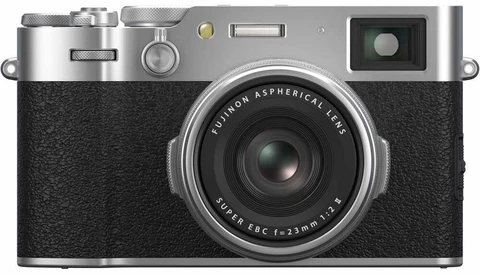
The compact camera is having a genuine revival, and it has caught the industry slightly off guard. Models that sat ignored for years are now selling out, prices are climbing, and manufacturers that abandoned the category are scrambling back into it. The reason is simple: people who grew up shooting on phones increasingly want something that feels deliberate, looks distinctive, and delivers image quality a phone cannot match. A premium compact earns its place by beating your phone at one of four things: image quality, reach, video, or the sheer pleasure of carrying and using it.

Adobe Is Buying One of the Last Good Things in Photo Editing

Adobe announced on June 25 that it has agreed to acquire Topaz Labs, the Dallas company whose denoising, sharpening, and upscaling tools quietly became part of how a huge number of photographers finish their work. Neither side put a number on the deal. Closing is targeted for the back half of 2026, assuming regulators sign off. Adobe says Topaz CEO Eric Yang will stay on, the standalone apps will keep running, and the underlying models will eventually flow into Firefly, Firefly Services, and Creative Cloud apps.

Why a Decade-Old DSLR Keeps Winning Awards, and What That Should Teach You

Earlier in 2026, a 15-year-old named Jack Crockford won his category at the British Wildlife Photography Awards 2026 with a frozen instant of a Eurasian hobby snatching prey out of the air, a shot that demands timing most photographers spend years failing to develop. He did it with an aging professional DSLR and a long telephoto lens, not one of the artificial-intelligence-driven mirrorless bodies that dominate every camera advertisement this year. On its own, that is a charming footnote. The problem is that it is not on its own.

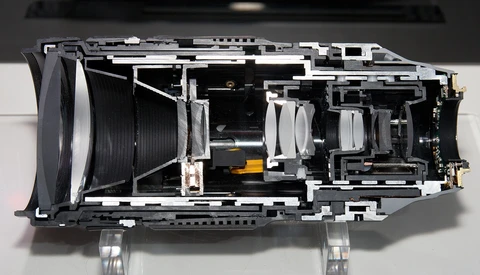
The Most Underappreciated Trend in Lens Design Right Now

For roughly two decades, the standard zoom lens started at 24mm. Before that, it started at 28mm or even 35mm. The 24-70mm f/2.8 became the default in the early 2000s and stayed there so long that the starting focal length became invisible. 24mm was simply where a standard zoom began, and nobody questioned it because there was nothing to question.

Which Is Right for You? Canon's R6 Lineup Compared: Mark II vs. Mark III vs. R6 V

The Canon EOS R6 used to be a simple recommendation. You wanted a full frame hybrid that did a little of everything well without costing as much as the R5, so you bought the R6, and that was the end of the conversation. That clarity is gone. The line has split into three very different cameras that happen to share a name, and choosing between them now means knowing what kind of shooter you actually are. The good news is that once you sort that out, the right answer becomes obvious, because Canon has aimed each of these bodies at a genuinely different person.

The Quiet Argument Against Photographing Everything

There is a reflex most photographers know well. Something happens, a light shifts, a child laughs, a stranger's face catches the sun, and before the moment has fully registered, the camera is already up. The hand moves faster than the thought. 

The Decisive Moment Is 74 Years Old. Does It Still Apply?

In 1952, Henri Cartier-Bresson published "Images à la Sauvette," a collection of 126 photographs with a cover designed by Henri Matisse. The American edition, published the same year by Simon and Schuster, was titled "The Decisive Moment," and that phrase entered photography's vocabulary so completely that it has shaped how photographers think about their medium ever since.

Everyone Assumes the First Weather Satellites Used Film. The Real Story Is Far Stranger.

When Hurricane Camille filled the Gulf of Mexico in August 1969, satellites watched it the entire way in. The storm came ashore on the Mississippi coast as a Category 5 with sustained winds of 175 mph and a storm surge of more than 24 feet, and it killed more than 250 people. It would have killed many more if forecasters had not seen it coming from space. The Weather Bureau later estimated that the warnings and evacuations enabled by modern tracking and forecasting may have saved as many as 50,000 lives.

The 5 Best Film Stocks for Beginners in 2026

Starting in film photography means making a choice before you ever press the shutter: which film to load. The wrong stock can make a beginner's early rolls frustrating and expensive, full of muddy colors and missed exposures. The right stock is forgiving, widely available, affordable enough to shoot freely, and consistent enough that you learn from your mistakes instead of wondering whether the film was the problem. These five fit that description better than anything else on the market, and between them they cover bright daylight, saturated landscapes, mixed and low light, and the two classic black-and-white looks every new shooter should try.

The 10 Most Important Camera Settings: A Plain-Language Glossary for Beginners

A new camera presents you with hundreds of settings, and the manuals that explain them are written as if you already understand the vocabulary. You do not need to learn all of it. You need to understand about ten settings well, because those ten control almost everything about how your photographs turn out. Here is what each one does, in plain language, without the jargon that makes photography sound harder than it is.